
Dental Fillings in Pottsville, PA
When a cavity shows up on an X-ray, the fix is usually straightforward. We’ll walk you through what we found, what it’ll take to repair it, and what your insurance will cover before any work begins

A Practical Look at Dental Fillings in Pottsville PA
Most patients who come in for dental fillings in Pottsville PA are dealing with something small that the digital X-ray caught early. A dark spot between two molars. A bit of sensitivity to cold that started a few weeks ago. A chip on a back tooth from a piece of hard candy. Fillings exist to handle exactly that kind of problem before it turns into something larger.
A filling is the way we repair a tooth after the decayed portion has been cleaned out. The hole left behind gets filled with a tooth-colored composite material that bonds to what’s left of the natural tooth and restores its shape and function. It’s one of the most common procedures in dentistry, and for good reason. Done early, it keeps a small cavity from becoming a crown or a root canal down the road.
Dr. Scott Fellows has been placing fillings for families across Pottsville, Saint Clair, Minersville, Schuylkill Haven, and the rest of Schuylkill County for years. The approach is the same whether you’re nine or seventy-nine: show you what we see, explain the options in plain language, and get the work done without drama.
How We Find Cavities Before They Turn Into Bigger Problems
Catching decay early is the whole reason we put money into modern diagnostic technology. Our digital X-rays use the Overjet Iris system, which is an AI tool that helps flag early decay between teeth that the eye can miss. The intraoral camera lets us pull up a clear image of the tooth on the screen so you can see what we’re describing. No guessing, no taking our word for it.
A lot of cavities don’t hurt yet when we find them. That’s actually the goal. By the time a tooth is sensitive to hot or cold, or sore to bite on, the decay has usually worked its way deeper than a simple filling can fix. The point of regular exams and cleanings is to catch the problem at the stage where a filling is still the right answer.
If you’ve been told you have a cavity at another office and want a second look, we’re happy to do that. We’ll show you the X-ray, walk through what’s there, and tell you honestly whether it needs treatment now or whether it’s something we can watch.
What the Filling Appointment Actually Looks Like
A filling appointment for one or two teeth usually runs about an hour. Dr. Fellows starts by numbing the area around the tooth so you don’t feel the work. Once you’re comfortable, the decayed portion of the tooth is removed and the area is cleaned. Then the composite material is placed in layers, shaped to match the rest of the tooth, and hardened with a curing light. A quick bite check at the end makes sure everything lines up the way it should.
We use tooth-colored composite for nearly every filling we place. It bonds directly to the tooth, blends in with the surrounding enamel, and holds up well for everyday chewing. For most patients, you can’t tell the filling is there once it’s done. That matters more on front teeth, but it’s nice on molars too.
You’ll leave with the numbness still wearing off, which usually takes another hour or two. Most people go back to work or pick the kids up from school the same afternoon. Some mild sensitivity to cold for a few days is normal. If it lingers past a week or the bite feels off, call us and we’ll bring you back in to adjust it.
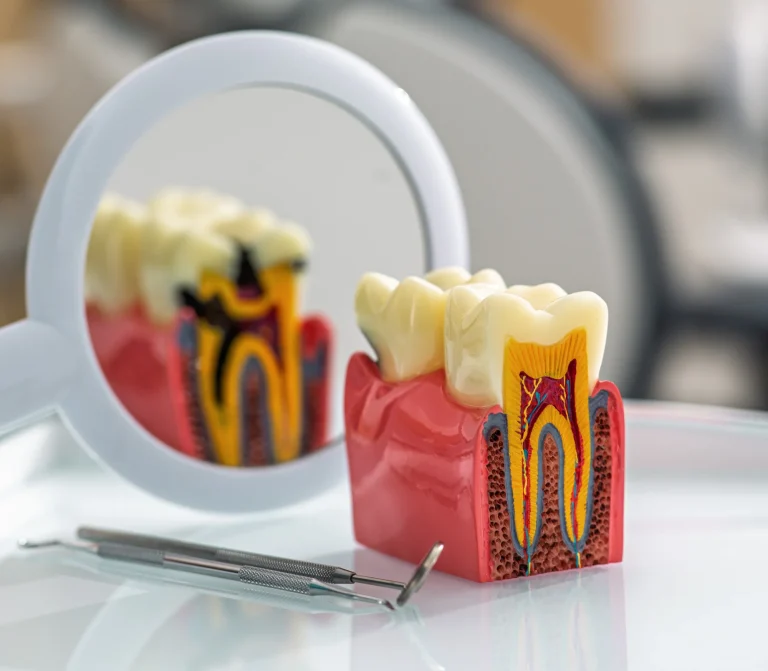
What's Included When You Come In for a Filling
Every filling visit at Fellows & Smink starts with us reviewing your X-rays and the tooth itself on the intraoral camera. Before any instruments come out, you’ll know exactly which tooth we’re working on, how deep the decay goes, and whether a standard filling is still the right call or whether the tooth has reached the point where a crown would hold up better. If it’s borderline, we’ll tell you what can wait and what shouldn’t.
The visit itself includes the local anesthetic, the removal of the decayed tooth structure, the composite material, the shaping and polishing, and the bite check. If you need more than one filling, we’ll often group nearby teeth into the same appointment so you only have to be numb on one side of your mouth once. Parents bringing in two kids on the same day is something we do all the time. Same building, same afternoon, in and out.
Because we keep a wide range of care under one roof, if the X-ray shows the decay has gone past where a filling can help, we don’t have to send you somewhere else. Dr. Fellows can talk you through restorative dentistry options like crowns and bridges or root canal therapy in the same conversation, and schedule the follow-up here.
What PPO Insurance Usually Covers on a Filling
Fillings are one of the most predictable procedures when it comes to insurance. We accept all PPO dental insurance plans and file the claims for you. Most PPO plans cover composite fillings at somewhere between 70 and 80 percent after your deductible, though the exact number depends on your specific plan and where you are in your annual maximum. Before we schedule the work, we’ll check your benefits and give you a written estimate of what you’ll owe.
If you don’t have insurance, we offer flexible payment options and will sit down to map out a plan that fits your month. Fillings are usually the most affordable restorative procedure we do, and treating a cavity now almost always costs less than waiting for it to turn into a crown or an extraction. You can also read more about dental insurance in Pottsville PA and payment options on our site, or just ask the front desk when you call.

Why Treating a Cavity Early Pays Off
A small filling done today protects a lot more than the tooth itself. It keeps the decay from reaching the nerve, which is what eventually leads to root canals and crowns. It keeps the tooth strong enough to handle normal chewing for years to come. And it keeps the cost down, both for you and for whatever your insurance plan covers.
Fillings don’t last forever. A well-placed composite filling typically holds up for ten years or more with good brushing, flossing, and regular cleanings, but they do wear down eventually and may need to be replaced. We check the condition of older fillings at every exam and let you know when one is starting to leak or chip, before it causes a problem.
The bigger picture is prevention. Sealants for kids, fluoride treatment for patients prone to decay, and routine cleanings every six months are how we keep most patients from needing fillings in the first place. When one does show up, we handle it here without a referral, and we explain it clearly so you know what’s going on with your teeth.
Think You Might Have a Cavity? Let's Take a Look
Whether it’s a spot you noticed yourself or something that showed up at your last cleaning, we’ll review the X-ray with you and lay out what the repair would involve. Call Fellows & Smink Dental Associates on West End Avenue or request a visit online.