
Periodontics in Pottsville, PA
Care for the gums and bone that hold your teeth in place, handled in the same building where you get your cleanings and fillings. We’ll walk you through what your gums need and why.

What Periodontics Covers and Why It Matters
Periodontics in Pottsville PA is the part of dentistry that focuses on the gums, the bone underneath, and the small ligament fibers that keep each tooth anchored. When those tissues stay healthy, your teeth stay put. When they don’t, you start to see bleeding when you brush, gums pulling back from the teeth, or teeth that feel a little loose. Most patients don’t notice the early signs on their own, which is why we look for them at every checkup.
Gum disease usually starts quietly. Plaque hardens into tartar below the gumline, the gums get inflamed, and over time the bone that supports the tooth begins to shrink back. At Fellows & Smink Dental Associates, we treat the early and the advanced stages in the same office where you already come for your routine care. That matters because gum treatment works best when it’s caught early and followed up with consistent visits.
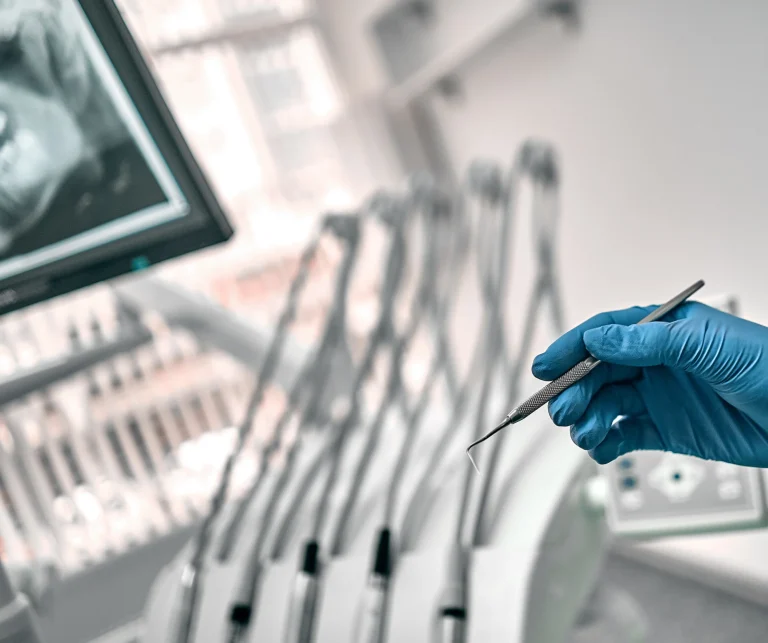
Dr. Scott Fellows uses digital X-rays with the Overjet Iris system and intraoral cameras to show you what we’re seeing. If there’s bone loss between two molars, we can point to it on the screen. If a pocket measurement on your chart is deeper than it should be, we explain what that number means and what we’d recommend doing about it. No guessing, no surprises.
Signs of Gum Disease We Watch For at Every Visit
The first signs are easy to miss because they don’t hurt. Gums that bleed when you floss. A little puffiness along the edge of the gumline. Bad breath that doesn’t go away after brushing. None of those mean you’ve done something wrong. They mean the tissue is irritated and asking for attention.
As gum disease progresses, the changes get more obvious. Gums pull back and teeth look longer. Spaces open up between teeth that used to sit tight against each other. A tooth might shift, or feel slightly loose when you bite. At this stage, we’re past gingivitis and into periodontitis, which involves bone loss. The good news is that periodontitis can be stabilized. The bone we’ve already lost doesn’t grow back on its own, but we can stop the progression and keep what’s there.
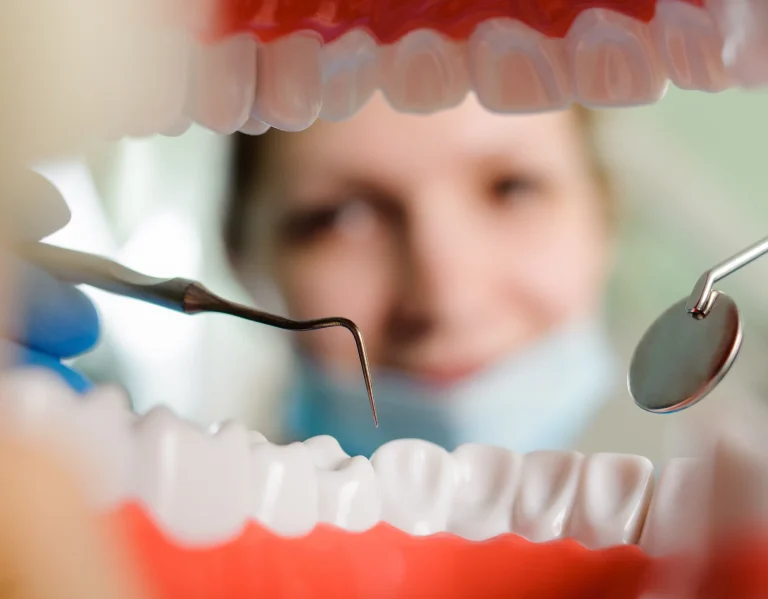
During your exam, the hygienist measures the small pocket around each tooth with a gentle probe. Healthy pockets are shallow. Deeper pockets tell us where bacteria are sitting below the gumline. We chart those numbers, compare them to your last visit, and use them to decide whether a regular cleaning is enough or whether you’d benefit from a deeper treatment. It’s a quiet part of the appointment, but it’s how we catch problems while they’re still small.
How We Treat Gum Disease at Fellows & Smink
For early gum inflammation, the answer is usually a thorough cleaning and a conversation about home care. We’ll show you on the intraoral camera where plaque is collecting, suggest a flossing technique that actually reaches that spot, and bring you back sooner than usual to check that it’s improving. Often that’s enough to settle the tissue down.
When the pockets are deeper and tartar has formed below the gumline, we recommend scaling and root planing. That’s a deep cleaning that removes buildup from the root surfaces and lets the gums reattach more closely to the tooth. It’s done with the area numbed, usually over one or two visits depending on how much of the mouth is involved. Most patients are surprised at how manageable it is.
For more advanced cases, we offer gum surgery to reduce deep pockets, repair tissue, or expose more of a tooth when needed for a restoration. And once gum disease has been treated, we move you onto a periodontal maintenance schedule, typically every three to four months instead of every six. That rhythm keeps the bacteria from coming back to the same levels, and it’s the single most reliable way to hold onto your results long-term.
What a Periodontal Visit at Our Office Includes
A periodontal appointment looks a little different from a standard cleaning, and we want you to know what to expect before you sit in the chair. We start with a conversation about anything you’ve noticed: bleeding, sensitivity, a tooth that feels off, a family history of gum problems. Then we take updated digital X-rays if it’s been a while, and the Overjet Iris system helps flag areas worth a closer look.
Next comes the pocket charting and a careful look at the gum tissue around every tooth. If we recommend treatment beyond a regular cleaning, we explain why, show you the images, and go over the plan in plain language. You’ll know what your insurance is likely to cover before we schedule anything, and for treatment that needs to be staged over more than one visit, we’ll map out the order.
After the cleaning or scaling itself, the hygienist walks through home care that fits your routine. That might mean a specific type of floss, a small interdental brush for a tight spot between two molars, or a prescription rinse for a few weeks. We keep the recommendations practical, because anything too complicated won’t stick. Small adjustments at home are what hold the work we do at the office in place.
What PPO Plans Usually Cover for Periodontal Care
Most PPO dental insurance plans cover at least part of periodontal treatment, but the specifics vary plan to plan. Scaling and root planing is typically covered under basic or major services, and periodontal maintenance cleanings are usually covered at a similar level to routine cleanings, though sometimes with a frequency limit. We accept all PPO dental insurance plans and file the claims for you, so you don’t have to chase paperwork after the appointment.
Before we start treatment, we’ll check your benefits and give you an estimate of what your share is likely to be. If a treatment can be split across two benefit years to make better use of your coverage, we’ll tell you that and let you decide. For patients without insurance, we offer flexible payment options and will sit down to talk through what fits your budget. The goal is no surprises on the way out the front door.
Why Treating Gum Disease Early Pays Off
Gum disease is the leading reason adults lose teeth. Not cavities, not injuries: gum and bone loss. Catching it early and staying on top of it is one of the most practical things you can do to keep your own teeth for the long haul, and it’s a lot less expensive than replacing teeth later with crowns, bridges, or implants.
There’s also a connection between gum health and the rest of the body. Chronic gum inflammation has been linked to heart disease, diabetes control, and other systemic conditions. We’re not going to overstate it: treating your gums isn’t a cure for anything else. But keeping inflammation down in your mouth is a reasonable part of staying healthy overall, especially for older patients managing other conditions.
Patients come to us from Pottsville, Saint Clair, Minersville, Schuylkill Haven, Orwigsburg, and across Schuylkill County because they want care that doesn’t get bounced from office to office. Periodontal treatment, restorative work, and implants if it ever comes to that are all handled under one roof, by people who know your history.
Ready to Have Your Gums Checked?
Call Fellows & Smink Dental Associates on West End Avenue in Pottsville to schedule a periodontal evaluation. We’ll walk you through what we find and what, if anything, needs to happen next.