
Dental Implants in Pottsville, PA
A practical, long-term way to replace teeth you’ve lost, planned and placed in the same building where you get your cleanings. Dr. Scott Fellows will walk you through what the process looks like and what your insurance will cover before any work begins.
A Straightforward Look at Tooth Replacement
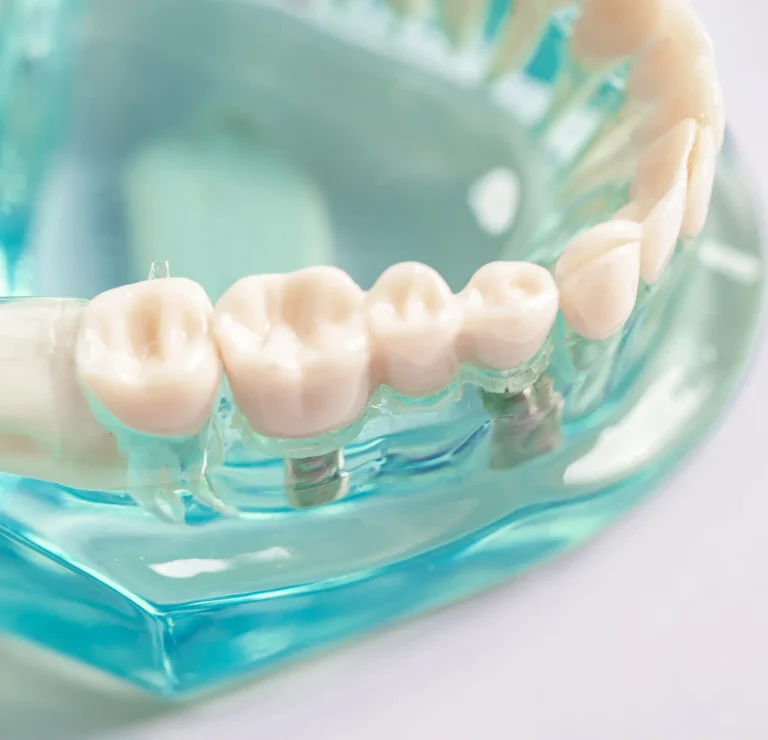
If you’ve been told you need to replace a tooth, or you’ve been living with a gap or a denture that’s never quite fit right, dental implants in Pottsville PA are usually the option we end up talking about first. They’re designed to act like a natural tooth root, anchored into the jawbone, with a crown on top that looks and chews like the tooth you used to have.
We see patients from Pottsville, Saint Clair, Minersville, Schuylkill Haven, and the surrounding Schuylkill County towns who come in for a single missing tooth, and others who are ready to talk about replacing several at once. The conversation is the same either way. We look at your X-rays together, talk about what’s bothering you, and map out what the work would involve, what it would cost, and what your insurance will cover.
Implant treatment isn’t a one-day fix, and we don’t pretend it is. But it’s also not the mystery it sometimes sounds like. Most of it is straightforward planning, careful placement, and time for your body to heal in between visits.
How a Dental Implant Replaces a Missing Tooth
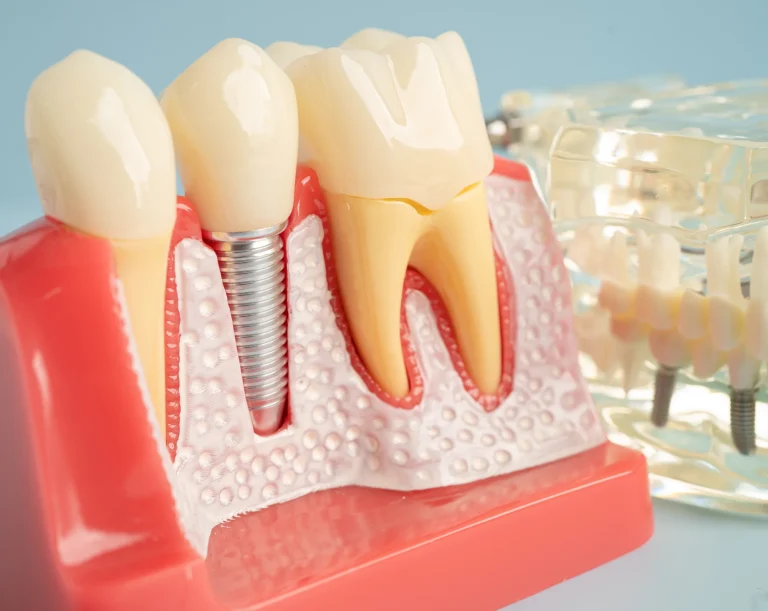
An implant has three parts. The post is a small titanium screw that takes the place of the tooth root, set into the jawbone. The abutment is the connector that sits on top of the post once everything has healed. The crown is the visible tooth, color-matched to the teeth next to it, that screws or cements onto the abutment.
The post goes in during a short surgical appointment. Most patients are surprised at how routine the visit feels. We use local anesthesia, and for patients who’d prefer not to be fully alert, we can talk about sedation options in the same building. After placement, the bone needs a few months to grow around the post and hold it in place. That waiting period is what gives an implant its strength.
Once we’ve confirmed the post has integrated, you come back to have the abutment and crown placed. That’s when the tooth starts working the way it should, and most patients tell us within a week or two they’ve forgotten which side of the mouth the implant is on.
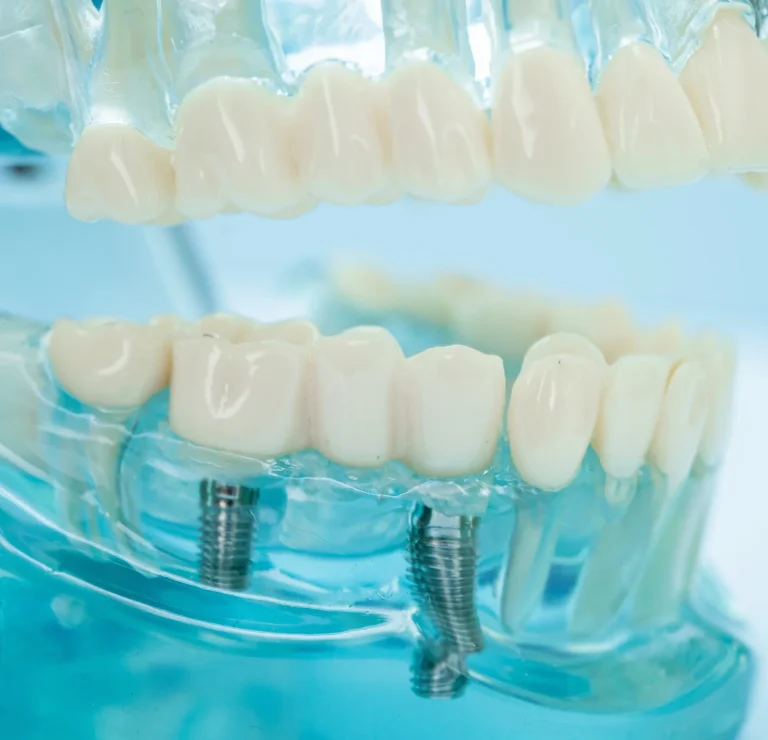
If you’re missing more than one tooth, the same idea scales up. Two implants can support a bridge. A full arch can rest on four to six implants. We’ll explain which approach fits your situation when we look at your X-rays together.
When an Implant Is the Right Call, and When It Isn't
Implants work well for adults who have a healthy jawbone, healthy gums, and a missing tooth (or teeth) they want replaced with something that stays in place. They don’t rely on the teeth next to them for support, which is one of the main reasons we recommend them over a traditional bridge when the neighboring teeth are still in good shape.
There are situations where we’ll suggest waiting or starting somewhere else. If gum disease is active, we treat that first. If there isn’t enough bone left in the area where the tooth was lost, we may talk about bone grafting before the implant goes in. Smokers heal more slowly, and patients with uncontrolled diabetes have a harder time with integration, so we factor those things into the plan honestly.
For some patients, especially those wearing dentures that have never felt stable, the conversation turns into a different one altogether. Implant-supported dentures or an All-on-4 approach can change how eating and speaking feel without leaving the kind of pressure sores a traditional denture can cause. We’ll lay out both paths and let you decide what fits.
What Your Implant Treatment Includes at Fellows & Smink
Every implant case starts with a consultation and a set of digital X-rays read with the Overjet Iris system. That gives us a clearer picture of bone height, root positions, and anything near the implant site we need to plan around. We’ll show you the images on the screen and point out what we’re seeing so you understand the recommendation, not just the bill.
From there, your treatment plan is written out in plain language: how many appointments, how long between them, what each step costs, and what your PPO insurance is expected to cover. If a bone graft or extraction needs to happen first, that’s included on the plan up front. No surprises partway through.
Placement, healing checks, and the final crown all happen in our office on West End Avenue. You won’t be sent to a specialist across the county for the surgical part and then back to us for the crown. Keeping it under one roof means one set of records, one team that knows your case, and one front desk filing the claims for you.
After the crown is in, you come in for your regular cleanings and exams the way you always have. Implants don’t get cavities, but the gums around them still need care, and we keep an eye on them at every visit.
What PPO Insurance Usually Covers on Implants
We accept all PPO dental insurance plans and file the claims for you. Coverage for implants varies more than coverage for fillings or crowns, so we always check your benefits before we start. Some plans cover the crown but not the post. Some cover a portion of both. Some have a missing-tooth clause that affects what gets paid. We’ll find out what applies to your plan and tell you the number before you commit to anything.
For patients without dental insurance, or for parts of the treatment that aren’t covered, we offer flexible payment options and will sit down to map out a plan that fits your month, not just your mouth. Implants are often staged over several appointments, which can make spreading the cost more workable than people expect.
If you’d like to look at the basics before your consultation, our Payment Options in Pottsville PA page covers how we handle billing, and our Dental Insurance in Pottsville PA page lists what we file.
Why Patients Choose Implants Over the Alternatives
An implant is designed to last for decades with good hygiene and regular checkups. It doesn’t ask the teeth next to it to carry any weight, and it keeps the jawbone in that area active, which slows the bone loss that follows a missing tooth. Practical reasons, not flashy ones, but they add up over time.
Patients who replace a denture with implant-supported teeth usually mention the same things: they can eat the foods they’d been avoiding, they’re not worrying about something slipping when they talk, and they stop thinking about their teeth as a daily project. That’s the goal we work toward when we plan a case.
Outcomes do vary based on bone health, hygiene, and how well the area heals, and we’re upfront about that during the consultation. The work we put into planning is what keeps surprises to a minimum once treatment begins.
Dental Implant Questions We Hear Most
How long does the dental implant process take?
Placing the post is a short surgical appointment. After that, the bone needs a few months to grow around the post and hold it in place. Once we’ve confirmed the post has integrated, you come back to have the abutment and crown placed. If a bone graft or an extraction needs to happen first, that step goes on your plan up front, and we’ll map out the full schedule with you at the consultation.
How much do dental implants cost?
It depends on how many teeth are being replaced, whether a graft or extraction is needed first, and what your insurance covers. We don’t quote numbers until we’ve looked at your X-rays and talked through your plan. Your written treatment plan lists what each step costs, what your PPO plan is expected to pay, and what’s left for you. Because implants are staged over several appointments, the cost can usually be spread out, and we offer flexible payment options for the rest.
Do I have enough bone for an implant?
We check bone height on your digital X-rays, and with a 3D scan when needed, before we recommend anything. If the bone has thinned where the tooth was lost, a graft can rebuild the area first so the implant has a solid foundation. A small socket graft is often ready in three to four months.
How many implants will I need?
That depends on how many teeth are missing. A single missing tooth is usually replaced with one implant and a crown. Two implants can support a bridge. A full arch can rest on four to six implants. We’ll explain which approach fits your situation when we look at your X-rays together.
Does getting an implant hurt?
We use local anesthesia for placement, and most patients are surprised at how routine the visit feels. If you’d prefer not to be fully alert, we can talk about sedation options in the same building. You’ll go home with clear written instructions for the days after.
How long do dental implants last?
An implant is designed to last for decades with good hygiene and regular checkups. Implants don’t get cavities, but the gums around them still need care, so we keep an eye on them at your regular cleanings and exams.
Talk Through Your Options With Dr. Fellows
Bring your questions, any recent X-rays you have, and your insurance card. We’ll look at everything together and tell you what makes sense for your situation before anything is scheduled.